TTRPG news · Source announcement: 2026-11-22
A difficult session in a long-running Mage: The Ascension game left players feeling as divided and exhausted as their characters. In a Geek Native column published November 22, 2026, the game’s narrator describes how the group found a way forward: check in outside the fiction first, give everyone room to settle, and make space for a supported conversation before attempting an in-character resolution. It is a personal account, not a universal fix, but its order of operations is worth considering.
What happened in the Mage: The Ascension session
The column’s author recounts a disagreement between two players during a game set around a journey through 1990s Britain. The argument began in character, but left one player confused and some of the group uncomfortable. The characters then split into several groups, and events escalated into a dangerous retreat.
The session ended with the group feeling harried, tired and divided. The author’s concern was not simply that the characters were in trouble; the players seemed to share some of that strain. That distinction matters: an in-fiction crisis and a real disagreement at the table can become entangled, but they are not the same problem.
The author’s approach: repair outside the fiction first
Between sessions, the author checked in with both players and gave them space to explain how they felt. Once it seemed to be a difference in outlook that could be resolved, the next session did not immediately reopen the disputed scene. Instead, the author let the players settle back into the game, kept the affected players away from the opening action, and introduced humour as the session continued.
When it was time to bring the group together, the author included other players and an NPC. In the column’s account, those extra voices offered support and helped keep the conversation from becoming more hurtful. The discussion became a chance for players to listen, explain their perspectives and talk about a broader sense of division in the group.
- Check in privately between sessions before deciding how, or whether, to revisit a conflict in character.
- Let players re-enter the game at their own pace rather than forcing an immediate return to the disputed scene.
- If the group agrees to discuss the issue together, consider what support or neutral facilitation would help.
What existing groups can take from the story
The useful point is the sequence, not a prescribed script: attend to the people first, then decide whether an in-game resolution would help. The author says the group’s eventual fictional reconciliation followed a conversation in which players listened and made themselves vulnerable. The session also included an in-character ritual; that was this group’s choice, not a remedy readers should assume will suit every table.
For a game master, a practical takeaway is to ask what the affected people need before planning a dramatic scene. That is editorial advice, not a rule from Mage: The Ascension or a guarantee that one approach will work. The author explicitly says the method will not work for everyone and suggests that sacrificing plot time for a reset can be worthwhile.
What this is—and what it isn’t
Geek Native published the piece on November 22, 2026. It is a first-person reflection on one group’s experience, rather than a publisher announcement, a new Mage: The Ascension supplement, or an official procedure. The narrator also describes awarding each player a Willpower point after the conversation, but that is a choice made in their game, not evidence of a general rule change.
Readers considering a similar response should not treat the column as a substitute for addressing a serious or ongoing problem outside the game. Its clearest limitation is also its most useful one: the author frames the account as a possible blueprint, not a fix that will suit every group.
Quellen- und Bildnachweise
Ein Originalbericht auf Grundlage des angegebenen Quellenartikels; es handelt sich nicht um einen Praxistest. Produktpläne und Crowdfunding-Prognosen können sich ändern.
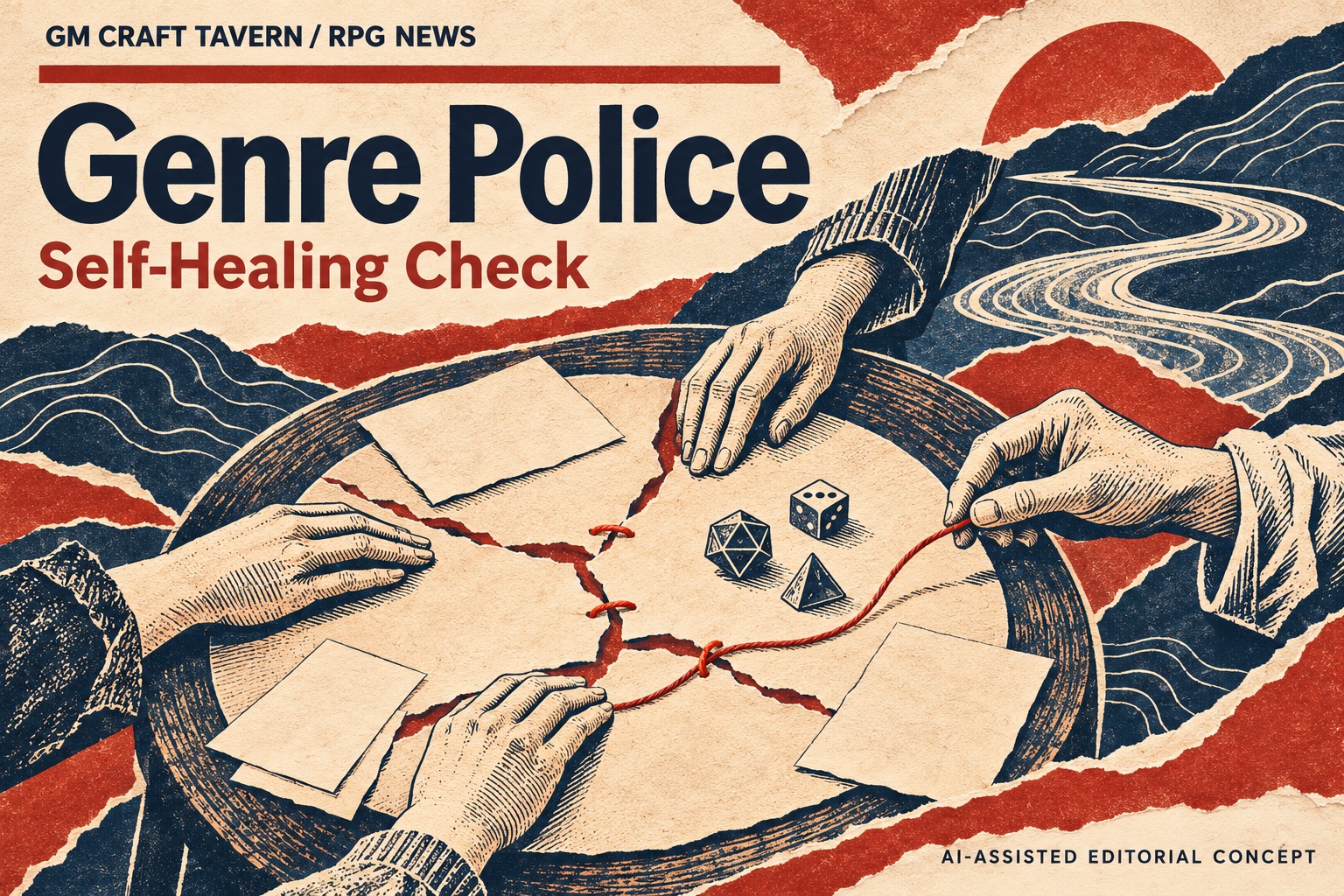
Originelle, KI-gestützte redaktionelle Illustration, erstellt für GMCraft Tavern. Diese konzeptuelle Szene ist weder offizielles Artwork eines Verlags noch Produktcover oder Software-Screenshot. GMCraft Tavern ist unabhängig von den hier behandelten Verlagen.