
TTRPG news · Source announcement: 2026-10-07
Pelgrane Press has published an optional set of GUMSHOE house rules aimed at a familiar problem: published scenarios can be built for more players than a home group actually has. In an article dated October 7, 2026, John-Michelle O’Shea outlines dice changes that make player characters and major NPCs more likely to succeed, while leaving mooks weaker and preserving the possibility of failure. This is a proposed table hack, not a newly announced core-rule update.
A house-rule answer to a small-party problem
O’Shea frames the proposal around the extra work small-group GMs can face when published adventures expect more characters. Simply reducing opposition can make a climactic battle feel thin; adding NPC allies can shift too much of the action away from the players. The article offers a third approach: improve the odds for the heroes without removing the threats around them.
The author describes the result as either greater heroism or an easier mode, depending on taste. That distinction matters. These rules are for tables that want characters to accomplish more, not a universal fix every GUMSHOE group should adopt.
What changes at the table
For general ability rolls, player characters and major NPCs roll two six-sided dice and keep the higher die instead of rolling one. Advantage adds a third die, with the highest result kept; disadvantage takes the roll back to one die. Mooks remain on one die and do not receive advantage or disadvantage.
The article’s probability table illustrates the effect: against difficulty 4, success rises from 50% on one die to 75% on two dice. With advantage and three dice, it reaches 87.5%. These are the article’s figures, not a separate playtest result.
Advantage should be earned, not handed out
O’Shea advises treating advantage as a narrative reward for preparation, rather than as a routine bonus for favorable circumstances. Players might plan an ambush, for instance, but their plan could be undermined by information they do not have. The GM can use that uncertainty to make the stakes matter rather than simply awarding the extra die.
That guidance helps keep the stronger roll from flattening every scene. The author also cautions against routinely raising difficulties to counteract the house rule: doing so can erase the benefit the group adopted it for.
Fewer complications, but risk remains
Under the proposal, complications happen only when all dice show 1. The article gives the chance as around 3% on a standard two-die roll and around 0.5% with advantage. Mooks do not generate complications under this rule.
This is not a blanket removal of danger. The author says the changes leave GUMSHOE’s health and damage mechanisms untouched, and the dice still allow failure. The intended trade-off is more capable protagonists, not invulnerable ones.
What existing groups should know
The article names Night’s Black Agents, Trail of Cthulhu and Swords of the Serpentine when presenting the hack. It does not establish that every GUMSHOE book or scenario is universally compatible without adjustment. Groups should check their own game’s procedures and decide whether these changes suit the tone they want.
Editorial advice: try the mechanic for a short arc or a few sessions, and agree in advance how the GM will award advantage. That makes it easier to judge whether the added reliability helps your group without quietly replacing the game’s intended challenge.
Sources and image credits
Original reporting based on the publisher’s announcement; this is not a hands-on review. Product plans and crowdfunding estimates may change.
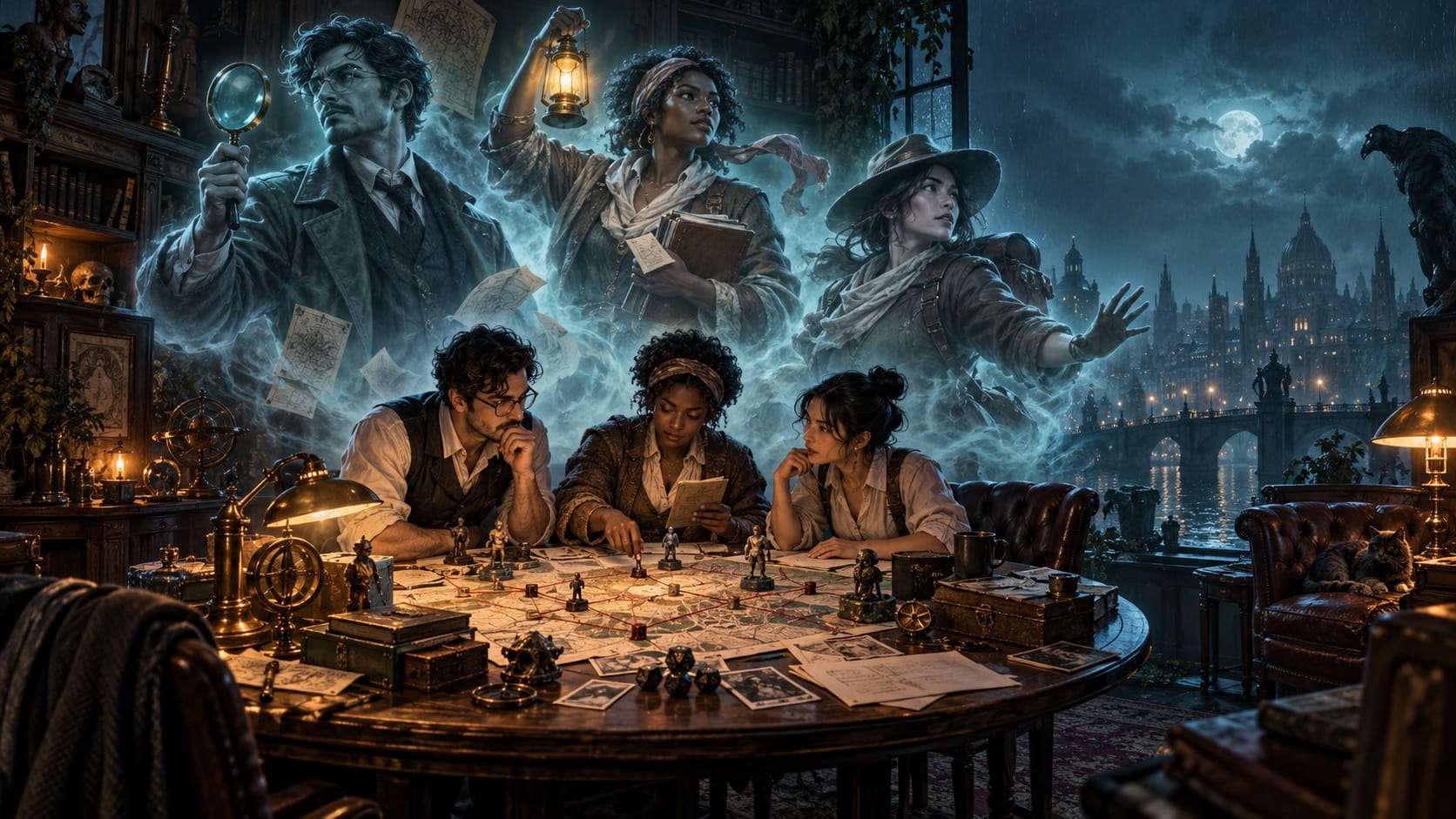
Original AI-assisted editorial illustration created for GMCraft Tavern. This conceptual scene is not official publisher artwork, a product cover, or a software screenshot. GMCraft Tavern is independent of the publishers covered.