
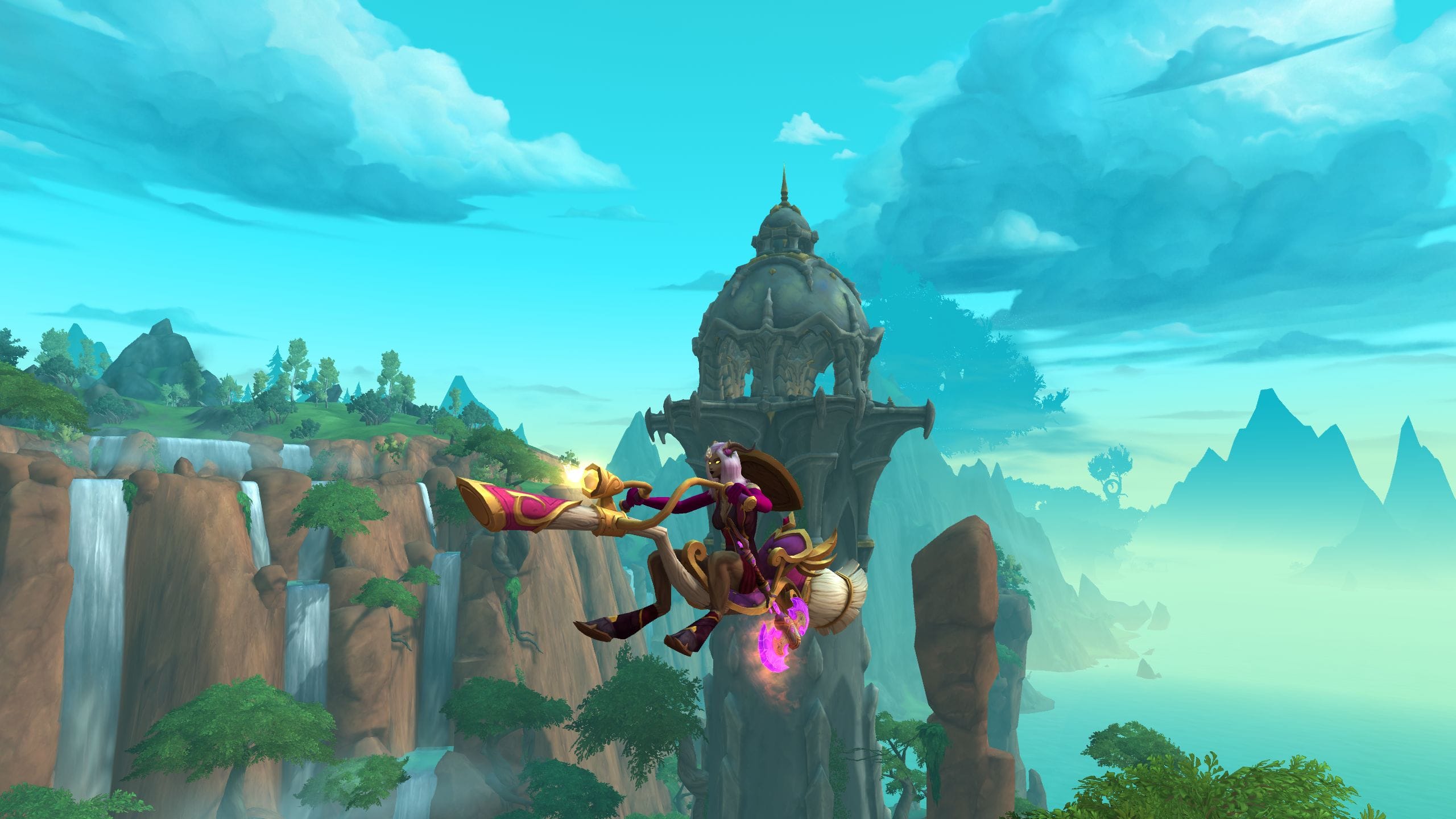
Poison is a very common effect in tabletop RPGs, which is exactly why it’s so hard to weave into encounters in fresh and interesting ways. When familiar approaches start to feel stale, video games can offer some inspiration, and few are better suited to the task than World of Warcraft, with its latest Venomous Abyss raid, packed with ideas for Game Masters looking to go beyond the usual toxic monsters and damage-over-time effects.
Let’s look at some of the raid’s mechanics and see how they can help create more engaging dungeon design.
Environment As Part of the Fight
Vashnik the Malignant is a great example of a dynamic battlefield.
During the encounter, Vashnik draws power from venomous fountains scattered across the arena, gaining different abilities and summoning different types of adds depending on which fountains are active. Summoned enemies move toward a cavity, triggering a dangerous burst if they reach it.
You can bring the same concept to D&D by making the lair itself an active threat.
Imagine three altars surrounding a central cauldron, each with a different toxic effect. On initiative count 20, the boss taps into one of the altars, triggering its effect. Players can destroy the altars, but doing so will spawn a fast-moving slime with low HP that ignores the party and crawls toward the cauldron. If the slime reaches the cauldron, it dies on contact, releasing a toxic, unavoidable, group-wide wave of damage.
This way, you can create pressure through the environment and encourage tactical decision-making.
Just make sure to telegraph each threat clearly so players know which altar is about to activate. And keep the altars relatively easy to destroy, at around 30-40 HP, so that taking them down doesn’t eat up half the encounter.
Poison As a Puzzle, Not Just a Penalty
The Entombed Sentinels encounter takes a different approach. During an intermission, the Sentinels inflict a stacking Helical Toxins debuff. Players can neutralize it by colliding with another affected player when their combined stacks reach exactly four. Get the combination wrong, and the poison erupts into a much more dangerous effect.
For a tabletop encounter, this becomes a great combat puzzle.
Your boss can infect characters with a toxin. At the start of each affected character’s turn, they take some poison damage and gain one stack. Characters within 5 feet of each other can use an action to transfer one stack between them. If a character reaches exactly four stacks, the toxin is neutralized, granting immunity to this effect for the rest of the fight. But reaching five or more stacks triggers a toxic explosion, dealing massive poison damage to that character and everyone within 10 feet before resetting their stack count to one.
Now players have to coordinate instead of simply healing through the damage. Who needs help before their next turn? Is it worth spending an action to prevent an explosion?
Make sure to keep the rules easy to track with counters, colored tokens, or visible marks on character sheets. The goal is to encourage teamwork and tactical decisions, not turn combat into a math exam.
Players Shaping the Battlefield
Sszorak demonstrates how dangerous terrain can become a tactical tool. During the fight, players affected by Venomous Surge must drop cysts at assigned locations. Later, powerful winds push the raid across the platform, and players use those cysts to control their movement and resist the wind.
This is a clever lesson for dungeon design: hazards don’t always have to be obstacles. In D&D, you can recreate this mechanic through forced movement and environmental interactions, challenging players to think spatially.
Your boss or the lair can infect randomly chosen characters with toxins. At the end of their turns, they must leave a puddle in their current space. Each puddle is a fixed obstacle, but it can also serve as a makeshift anchor. Every few rounds, or when the boss reaches a certain health threshold, the lair unleashes a powerful gust of wind, pushing every character 15-20 feet in a clearly telegraphed direction. A DC 15 Strength saving throw lets characters resist the push, and those who fail may be swept into a lava pit, a poisonous trench, or a wall that deals bludgeoning damage on impact.
If a character positions a puddle directly behind them relative to the wind, they can be pushed into it and stop short of the hazard. The collision still deals a small amount of poison damage, but that’s a much better outcome than being thrown off a ledge, right?
Every Hazard Matters
The Venomous Abyss is a mechanically demanding raid, with poison effects heavily influencing positioning, target priorities, and teamwork. For many groups, especially on higher difficulties, it can be a real challenge, so it’s no surprise that players turn to Venomous Abyss boost services to tackle the encounters alongside experienced teammates.
For Game Masters, the raid is a goldmine of ideas for building memorable poison-themed encounters. In tabletop RPGs, poison becomes really interesting when it creates tactical dilemmas, changes the battlefield, and rewards players who communicate and adapt. Don’t rely on damage alone. If you make your hazards easy to read and give players meaningful ways to respond, your dungeon will be remembered for the clever solutions it inspires—not just for how many hits everyone took.