TTRPG news · Source announcement: 2026-11-21
Progression fantasy makes getting stronger part of the story’s central engine. A recent Geek Native article connects that appeal to a familiar tabletop RPG pleasure: seeing practice, choices and rule mastery translate into greater capability. The comparison is useful, but the two experiences are not identical. Novels can make advancement the plot; games let players shape it through decisions at the table. Here’s what the connection explains—and where the genres differ.
What progression fantasy puts at the centre
Geek Native describes progression fantasy as fiction in which a character’s step-by-step increase in ability drives the plot. Training, research and breakthroughs are not just background details: the process of becoming more capable is a major part of what readers follow.
That focus does not automatically make a story LitRPG. The article distinguishes progression fantasy’s emphasis on growth from LitRPG’s explicit game mechanics, such as stat displays or hit-point bars. A character can improve through disciplined study and effort without the world presenting a videogame-like interface.
Why the tabletop comparison works
In many tabletop campaigns, players watch characters develop over time. They may gain experience, improve skills, acquire equipment or find new ways to use the rules. That makes character advancement a natural point of comparison with fiction that foregrounds a similar journey.
The overlap is especially clear in system mastery: the satisfaction of understanding a game’s rules well enough to make thoughtful choices. Geek Native argues that watching a fictional character experiment and improve can echo the pleasure of working out a character build between sessions.
The difference between reading and playing
The comparison should not erase a key distinction. In a tabletop RPG, players make choices within a group’s shared game, and their characters’ development happens through play. In a novel, the author controls the character’s path and can shape the pacing of training and breakthroughs around the story.
That makes progression fantasy a useful lens on why advancement can be compelling, not a substitute for a campaign. Stories can offer a concentrated view of incremental improvement; a game gives players a chance to make decisions that affect how their own characters change.
What readers and GMs can take from the idea
For readers, the label is a way to find stories where capability-building is a central draw, without assuming every book uses explicit stats. For GMs, the connection offers a practical prompt: make character growth feel connected to choices and effort, rather than treating advancement as a number that changes between sessions. That is editorial advice, not a rule or recommendation attributed to Geek Native.
Geek Native published its article on November 21, 2026. It discusses a genre and its relationship to tabletop play; it does not announce a new RPG, rules update or product release.
Sources and image credits
Original reporting based on the credited source article; this is not a hands-on review. Product plans and crowdfunding estimates may change.
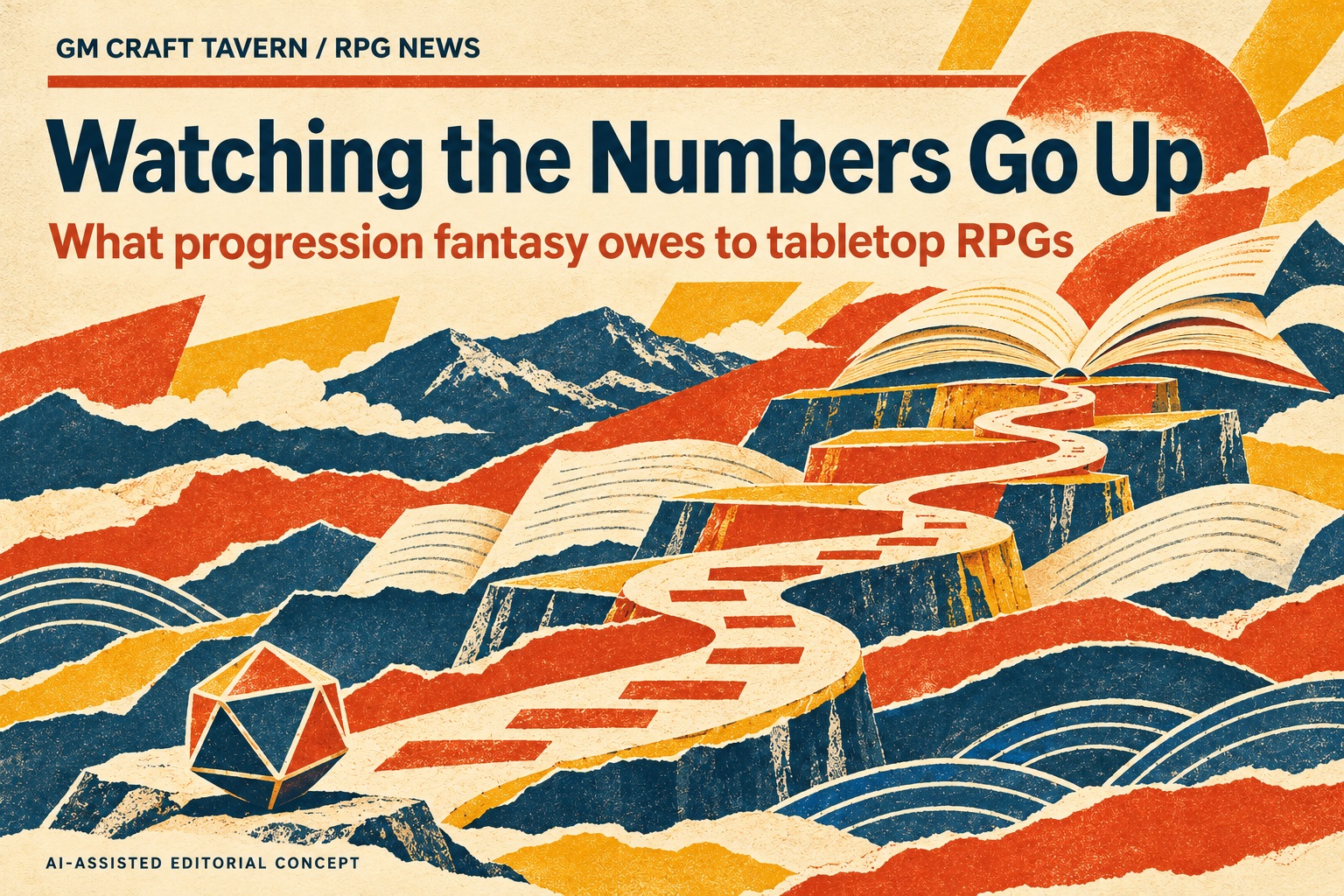
Original AI-assisted editorial illustration created for GMCraft Tavern. This conceptual scene is not official publisher artwork, a product cover, or a software screenshot. GMCraft Tavern is independent of the publishers covered.