Hey there, fellow Dungeon Masters and RPG creators! If you’re looking to make your D&D content more discoverable by AI search engines, you’re in the right place. In today’s digital landscape, understanding how to optimize your D&D assets for AI search and Generative Engine Optimization (GEO) is crucial for boosting your visibility and sales. With a few practical steps, you can ensure that your maps, tokens, and adventures are easily found by potential players. Let’s dive into some actionable strategies to enhance your D&D content’s reach!
What you’ll learn in this article
- 🎲1Understand the importance of Generative Engine Optimization (GEO) for making your D&D content discoverable.
- ✅2Learn how to conduct keyword research tailored for AI searches, including phrases like “play DnD online” and “find D&D players.”
- 🔎3Discover effective content structure and formatting strategies for AI crawlers and language models (LLMs).
- 🧙4♂️ Master metadata, tags, and schema implementation to enhance your D&D assets’ visibility.
- 🖼5️ Optimize images for GEO, focusing on alt text for battlemaps and visual assets.
- ✍6️ Utilize AI prompts to create machine-readable metadata and product descriptions for your D&D content.
- 🎲7Creating AI-friendly product descriptions and listings
- 🎲8Visual asset tagging, alt tags, and token metadata
- 🎲9Platforms, distribution and publishing strategies
- 🎲10Automating repetitive GEO tasks (pipelines & tools)
- 🎲11Measuring success: KPIs and analytics for GEO
- 🎲12Legal, licensing and ethical considerations for AI-generated content
- 🎲13Maintenance, updating and content rot prevention
1. What is GEO (Generative Engine Optimization) for D&D creators?
Generative Engine Optimization (GEO) is all about structuring your content so that generative engines, like ChatGPT or Google AI, can extract and cite your D&D maps, tokens, adventures, and digital assets effectively. Unlike traditional SEO, which focuses on improving page rank and attracting clicks, GEO emphasizes creating passage-level, entity-rich chunks of content that are easily extractable. This means that instead of crafting long articles, you should focus on concise, well-structured passages that provide clear answers to potential user queries.
For instance, if you optimize a product listing for a D&D adventure, you might create a TL;DR (too long; didn’t read) section that succinctly summarizes the adventure’s key details, making it more likely to be cited by an AI.
1.1 Definitions: AI search vs. traditional SEO
Tip: Start by thinking about how your content can be machine-readable. Use clear headings and short, informative passages that answer specific questions, making it easier for AI to pull the information.
GEO matters significantly for D&D creators because it increases the likelihood that your content will be surfaced directly in AI-generated responses, leading to greater visibility and potential sales.
1.2 Why GEO matters for maps, tokens, adventures and digital assets
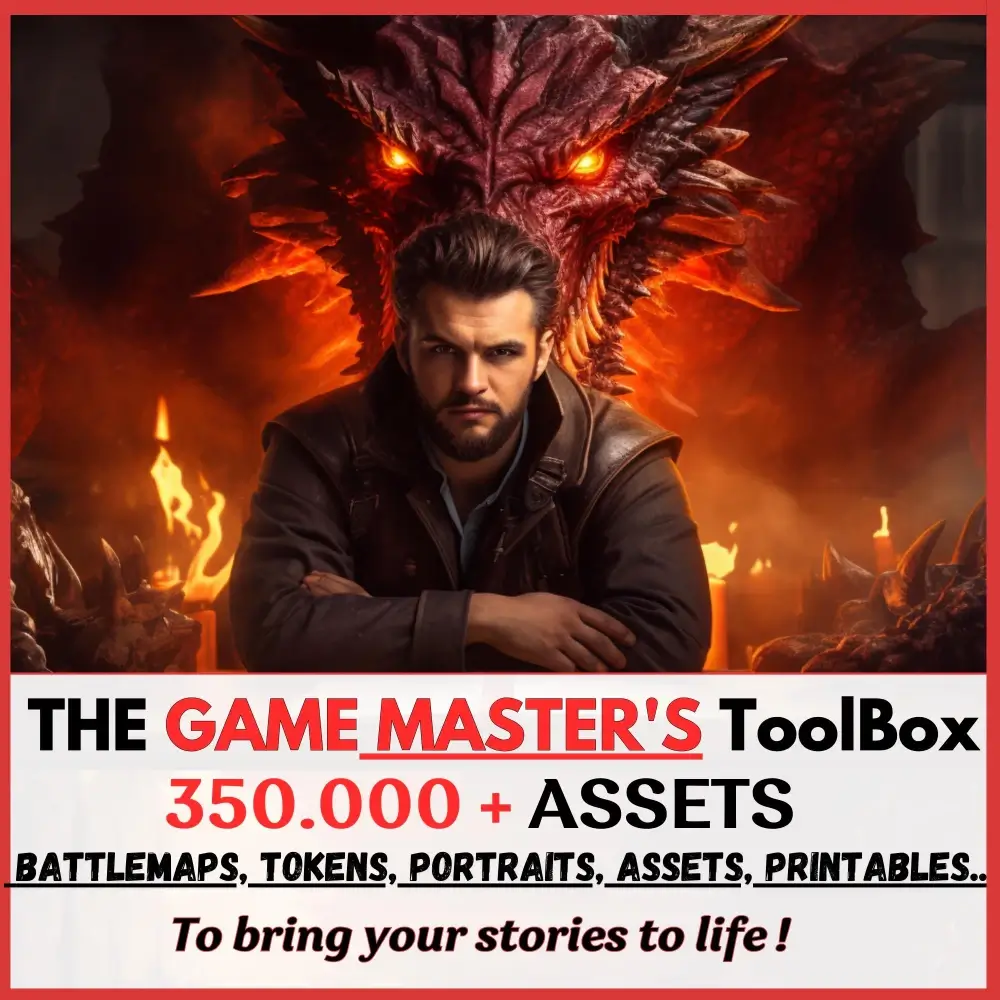
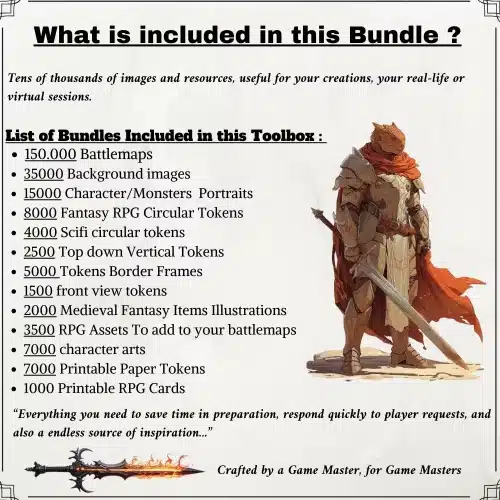
For example, if someone asks an AI for “the best printable D&D maps,” a well-optimized product like the “Game Master Toolbox” could be cited as a top result. By focusing on both the quality of your content and its structure, you can boost your chances of appearing in these AI responses, which is increasingly how people discover new RPG assets today.
2. Keyword research tailored to D&D and AI search
When it comes to keyword research for D&D content, focusing on long-tail, intent-oriented queries is crucial. These are specific phrases that reflect user intent, such as “how to create D&D maps” or “where to buy printable battlemaps.” A practical three-step procedure to discover these keywords includes: first, compiling a seed list of terms related to your content; second, filtering this list for search volume and competition using tools like Google Keyword Planner; and third, validating your keywords by testing them in generative engines like ChatGPT to see if they yield relevant results.
This iterative process helps ensure that you are targeting terms that not only have search volume but are also likely to be cited by AI.
2.1 Types of queries (intent): creation, run, buy, learn
Warning: Avoid generic keywords that are overly competitive or vague. Instead, hone in on specific phrases that clearly convey user intent to improve your chances of being surfaced in AI responses.
You can also categorize your keywords based on different types of queries, which include creation (e.g., “fantasy map-making brushes”), running (e.g., “how to use D&D tokens”), buying (e.g., “purchase D&D adventures”), and learning (e.g., “tutorials for RPG campaigns”).
2.2 Tools and methods to find AI-friendly keywords
By mapping existing listings to this intent matrix, you can tailor your metadata and content to better align with what potential customers are searching for, ultimately improving your content’s discoverability.
3. Content structure and formatting for AI crawlers and LLMs
To make your D&D content more accessible to AI crawlers and language models (LLMs), you need to focus on clear content structure and formatting. Start by using clear headings (like H1, H2, and H3) to break your content into digestible sections. This helps both human readers and AI extract relevant information quickly.
Additionally, incorporating short TL;DR sections at the beginning of your pages can summarize the key points in a concise manner, which is beneficial for AI citation.
3.1 Clear headings, structured data, and semantic blocks
Example: If your adventure is titled “The Lost Dungeon,” your TL;DR could read: “Explore the perilous Lost Dungeon, designed for levels 5-7, featuring five unique encounters and a treasure trove of magical loot.”

Another best practice is to use structured data and semantic blocks. This means including bullet points, lists, and FAQs that can be easily extracted by AI.
3.2 Best practices for long-form adventure pages
For instance, in your adventure page, you might have a section that lists key features: “Levels: 5-7 | Encounters: 5 | Format: PDF.” This structured approach makes it easier for AI to interpret your content and increases the likelihood of being cited in search results.
4. Metadata, tags and schema for D&D assets
When optimizing your D&D assets for AI search, metadata, tags, and schema are crucial components. Using the correct schema types, such as Product for shop items, CreativeWork for adventures, and DigitalDocument for downloadable assets, ensures that search engines understand the nature of your content.
For instance, a product listing for a D&D token pack should include essential fields like name, description, image, offers, and compatibility (e.g., “compatible with Roll20”). You can use JSON-LD (a method of encoding linked data) to format this information, making it machine-readable.
4.1 Title tags and meta descriptions optimized for AI
Tip: Always validate your schema using tools like the Schema Markup Validator to ensure that it is correctly implemented.
In your metadata, pay special attention to title tags and meta descriptions. These should be concise yet descriptive, ideally between 50–60 characters for titles and 140–160 characters for meta descriptions.
4.2 Recommended schema types (Product, CreativeWork, DigitalDocument) and what to include
For example, a title could read “50 D&D Printable Battle Maps,” while the meta description could state, “Discover 50 high-quality, printable D&D battle maps compatible with all major VTT platforms.” This not only improves visibility in search results but also helps AI understand the context of your content, increasing the likelihood of citations.
✨ Discover the Ultimate Tavern Bundle ✨
Stop prepping for hours. Get 350,000+ digital assets to create immersive campaigns instantly.
🎲 Get the Ultimate Toolbox Now
Instant Download • Lifetime Access
5. Image optimization for GEO (maps, tokens, battlemaps)
Optimizing your images for GEO is essential, especially for visual assets like maps and tokens. Start with file naming; use descriptive, hyphenated filenames that include relevant keywords.
For example, an image of a tavern map could be named “dnd-tavern-battle-map-5e-40×30-grid.png.” This practice helps both users and AI understand what the image depicts.
5.1 File names, alt text, captions that help generative engines
Additionally, providing concise alt text (around 120 characters) that describes the image is crucial. For the tavern map, you might use alt text like, “D&D 5e tavern battle map, 40×30 grid, secret door, VTT-ready.”
Warning: Avoid using generic file names like “image1.png,” as they do not provide any context for AI and can hinder discoverability.
5.2 Embedding text metadata inside images and sidecar files
Another important aspect is to surround your images with descriptive text that provides context. This approach not only helps with SEO but also improves the user experience.
6. Prompting & content summarization for generative engines
When creating content for your D&D assets, it’s essential to utilize AI effectively. One way to do this is by using AI prompts to generate metadata, alt text, and product descriptions. This approach not only saves time but also ensures that your content is optimized for visibility in AI searches.
After generating this content with AI, remember to human-edit the outputs to maintain a unique voice that resonates with your audience.
6.1 Prompt templates to create machine-readable metadata
To start, I recommend using the following prompt templates to create machine-readable metadata:
- Alt Text Generator: “Create an alt text for a [description of the image] including keywords like [keywords]. Keep it under 120 characters.”
- 150-Word Metadata Summarizer: “Summarize the key features of this D&D product in 150 words, focusing on [specific elements].”
- 300-Word Product Description Generator: “Write a detailed product description for [product name], highlighting its features, use cases, and compatibility.”
6.2 Example: summarize an adventure in 50/150/300 characters
By employing these templates, you can streamline your content generation process while ensuring that your listings are AI-friendly.
Creating summaries for your D&D adventures is crucial for both marketing and discoverability.
7. Creating AI-friendly product descriptions and listings
Crafting product descriptions that are both appealing to potential buyers and optimized for AI search is essential for enhancing your visibility. Start with a compelling hook that captures attention, followed by a detailed list of features, use cases, and technical specifications.
This structure not only aids in human engagement but also provides AI with the information it needs to accurately cite your products.
7.1 Structure: quick hook, features, use-cases, technical specs
For instance, your product description could follow this structure:
- Quick Hook: “Unlock your campaign’s potential with our beautifully crafted fantasy maps!”
- Features/Bullets:
- “High-resolution images (300 DPI) for stunning print quality.”
- “Compatible with Roll20 and Foundry VTT.”
- “Includes a variety of terrains: forests, mountains, and dungeons.”
- Technical/Compatibility + CTA: “Download in PDF format today and enhance your next adventure!”
7.2 3 sample product description templates (short, medium, long)
By using this structured approach, you ensure that your product descriptions are informative and optimized for AI discoverability.
To help you get started, here are three flexible product description templates that you can adapt based on your product size and platform constraints:
- Short Template:
Hook: “Discover the ultimate D&D token pack for immersive gameplay!”
Machine Metadata: “Tokens: 200 | Compatibility: Roll20, Foundry | Format: PNG”
Call to Action: “Download now to elevate your sessions!” - Medium Template:
Hook: “Enhance your D&D adventures with our customizable battlemaps!”
Machine Metadata: “Sizes: 40×30, 60×40 | Formats: PDF, PNG | VTT Compatible”
Call to Action: “Get your map pack today and start your next quest!” - Long Template:
Hook: “Dive deep into the world of D&D with our comprehensive Game Master Toolbox!”
Machine Metadata: “Assets: 350,000 | Formats: PDF, JPEG | VTT Compatible”
Call to Action: “Purchase now and access everything you need to run epic adventures!”
8. Visual asset tagging, alt tags, and token metadata
When it comes to visual assets, tagging them effectively is vital for both AI recognition and user engagement. Alt text (alternative text) serves as a description of images for search engines and visually impaired users, making it crucial for discoverability.
The key is to write concise, descriptive alt text that includes relevant keywords while accurately representing the image content.
8.1 Practical examples of alt text for maps and tokens
Here are three practical examples of alt text for various visual assets:
- Map Alt Text: “Detailed D&D 5e forest battle map with a 60×40 grid layout, ideal for tactical gameplay.”
- Token Alt Text: “Set of 20 D&D character tokens in vibrant colors, suitable for virtual tabletop platforms.”
- Battlemaps-Pack Alt Text: “Complete D&D battlemaps pack featuring 10 unique terrains, each with a 40×30 grid for easy use.”
8.2 Asset manifest approach (CSV/JSON) for marketplaces and VTTs
By crafting thoughtful alt text, you help enhance the SEO of your listings and improve the chances of your assets being surfaced in AI responses.
Creating an asset manifest is an effective way to streamline the ingestion of your products on various marketplaces and virtual tabletop (VTT) platforms. An asset manifest is essentially a structured document that contains metadata about your assets, such as filenames, alt text, tags, and compatibility information.
9. Platforms, distribution and publishing strategies
Choosing the right platforms to publish your D&D content can significantly enhance your AI discoverability. Platforms like Etsy, DriveThruRPG, and itch.io are particularly advantageous due to their structural data and community engagement.
When you publish on these platforms, make sure to utilize their tagging systems effectively. For instance, Etsy allows for 13 tags per listing, so take advantage of this by including relevant keywords that describe your product.
9.1 Where to publish for maximum AI discoverability (shop platforms, VTT marketplaces, blogs)
Additionally, consider leveraging social media as a distribution multiplier. Platforms like Reddit and Discord can amplify your reach, as AIs often crawl these channels for community references. Engaging with these communities can lead to increased visibility and sales.
9.2 Platform-specific tips (Etsy/DriveThruRPG/Itch/Shopify) and feed best practices
To maximize your AI discoverability, focus on publishing on platforms that are known to support structured data and community engagement.
Here’s a quick list to consider:
- Etsy: High discoverability due to its structured data; use relevant tags and concise titles.
- DriveThruRPG: Great for PDFs and RPG content; include metadata in your listings.
- itch.io: Ideal for indie games and digital assets; consider community engagement to boost visibility.
10. Automating repetitive GEO tasks (pipelines & tools)
Choosing the right platforms to publish your D&D content can significantly enhance your AI discoverability. Platforms like Etsy, DriveThruRPG, and itch.io are particularly advantageous due to their structural data and community engagement.
When you publish on these platforms, make sure to utilize their tagging systems effectively. For instance, Etsy allows for 13 tags per listing, so take advantage of this by including relevant keywords that describe your product.
11. Measuring success: KPIs and analytics for GEO
To ensure your optimization efforts for D&D content are effective, tracking the right Key Performance Indicators (KPIs) is essential. Start with basic metrics like impressions (the number of times your content appears in search results), click-through rates (CTR), and conversions (the percentage of visitors who take a desired action, such as making a purchase).
Aim for a CTR of over 2-3% as a good benchmark. Additionally, use UTM tags in your links to help track AI referrals and understand which channels are driving traffic to your listings. This data will provide insights into what’s working and where you might need to make adjustments.
11.1 Metrics to track (impressions, AI snippet hits, referral sources)
You can also introduce more specific metrics, such as “Answer Inclusion Rate,” which measures the percentage of AI queries that cite your content. To track this, keep a simple spreadsheet that logs your Google Search Console (GSC) impressions alongside periodic checks in AI models like Perplexity or ChatGPT.
By comparing the frequency of your content appearing in their responses, you can gauge how well your optimization is paying off. Remember to adjust your strategies based on the data you gather—if a certain keyword or listing isn’t performing, it may be time to rethink your approach.
11.2 How to set up experiments and A/B tests for title/meta variants
Tip: Consider setting up A/B tests for your titles and meta descriptions to see which variants perform better in attracting clicks and citations. This iterative testing will refine your GEO strategy over time.
12. Legal, licensing and ethical considerations for AI-generated content
As you create and optimize D&D content for AI search, it’s vital to consider the legal and ethical implications of your work. Start by ensuring that you have clear licensing terms for your assets, such as Creative Commons licenses for free resources or defined commercial use for paid content.
This transparency will help protect both you and your users from potential legal issues. Additionally, embedding attribution metadata directly into your product listings can guide AI systems and users alike, clarifying how your content can be used.
12.1 Attribution, licensing metadata, and avoiding copyright issues
Incorporate licensing URLs and author information into your schema (a structured data format that helps search engines understand the content of your site). This practice not only reduces the risk of AI hallucination—where an AI might fabricate information—but also provides clear guidelines for users about how they can legally use your content.

For example, if you’re selling a fantasy map, include a note in your product description stating the allowed uses and any restrictions. This will help ensure that your work is respected and properly credited.
12.2 Best practices for user-generated content and derivative works
Warning: Avoid vague licensing statements, as they can lead to misunderstandings about how your content can be used. Always be explicit about rights and restrictions.
13. Maintenance, updating and content rot prevention
To keep your D&D content discoverable and relevant, you need a strategy for ongoing maintenance and updates. Regularly refresh your keywords, images, and descriptions to prevent content rot—the gradual decline in visibility and relevance over time.
Schedule quarterly audits to assess which listings need updating based on their performance metrics, such as traffic and AI citation frequency.
13.1 Periodic refresh schedule and automated checks
During these audits, consider republishing bundles with newly optimized metadata and updated visuals to signal freshness to both users and search engines.
Automating parts of this process can help you maintain momentum without overwhelming yourself. Set up scheduled tasks using tools like Zapier or Make to automatically flag listings that haven’t been updated in a set period (e.g., 90 days).
13.2 Re-indexing signals and re-publishing strategies
This way, you can easily identify which assets need attention. Additionally, after a refresh, run a quick test in AI models to see if your updated content is being cited more frequently. This will help you measure the effectiveness of your updates and ensure your content remains relevant in the evolving landscape of AI search.
Fox’s take
In conclusion, optimizing your D&D content for AI search and GEO is an ongoing journey that requires attention and strategy. By following the six-step action plan—keyword research, metadata optimization, image enhancement, creating effective prompt templates, establishing a solid publish pipeline, and measuring your results—you can significantly increase your content’s discoverability.
Remember to keep iterating and updating your assets regularly to stay relevant. Now that you’re equipped with these tools, it’s time to implement them and watch your D&D creations shine in the digital world!
FAQ
What is Generative Engine Optimization (GEO)?
GEO structures content for AI extraction, enhancing discoverability.
How do I write alt text for battlemaps?
Use concise descriptions with keywords, focusing on details and context.
Which schema types are best for D&D products?
Use Product for items, CreativeWork for adventures, and DigitalDocument for downloads.
How often should I update my metadata?
Regular updates every few months help maintain relevance and visibility.
Can I rely solely on generative engines for traffic?
Combine GEO with traditional SEO for optimal visibility and traffic.
Continue reading
- Real-Time Visuals: How to Use Generative AI for NPC Portraits and Handouts During Play
Use generative AI NPC portraits to create on-the-fly character portraits and handouts during sessions—practical workflows & tools. - How to use DnD Beyond?
Learn how to use D&D Beyond: step-by-step character builds, campaign management, and VTT integrations like Beyond20 in one practical guide.