What you’ll learn in this article
- 🎲1Discover the immersive advantages of TaleSpire and Alchemy RPG over Roll20 .
- ✅1.1Understand the unique features of 3D virtual tabletops that enhance gameplay.
- 🔎1.2Compare TaleSpire vs Roll20 and evaluate their strengths and weaknesses.
- 🧙2♂️ Get step-by-step instructions for a successful VTT migration guide .
- ⚙2.1️ Learn how to optimize virtual tabletop performance tuning for smooth sessions.
- 💰2.2Find the best VTT asset marketplaces for high-quality game assets.
- 🗺3️ Explore effective mapping tools for VTT to create engaging environments.
- 🎥4Master the art of streaming TaleSpire and Alchemy RPG for an audience.
- 🎲5Migration workflows
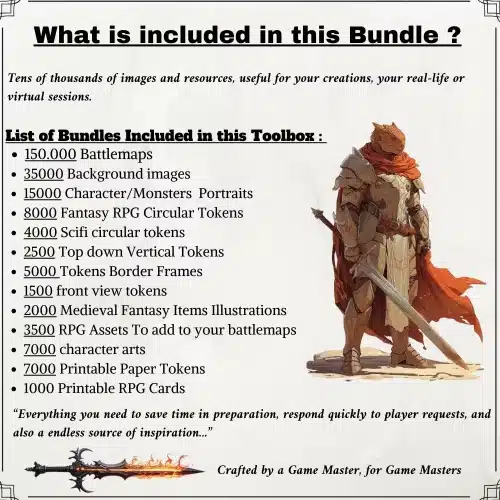
✨ Discover the Ultimate Tavern Bundle ✨
Stop prepping for hours. Get 350,000+ digital assets to create immersive campaigns instantly.


🎲 Get the Ultimate Toolbox Now
Instant Download • Lifetime Access
- 🎲5.22 From Roll20 to Alchemy RPG — step-by-step
- 🎲5.33 Hybrid workflow: rules in Roll20, visuals in TaleSpire/Alchemy
- 🎲6Asset management and marketplaces
- 🎲6.11 Naming, versioning, and backup strategies
- 🎲6.22 Using and vetting marketplace packs
- 🎲6.33 Select GM Craft Tavern assets: when and why to use them
- 🎲7Creating content: maps, modular builds, and props
- 🎲7.11 Best practices for modular map design
- 🎲7.22 Porting 2D maps to 3D scenes
- 🎲7.33 Example: building a multi-level dungeon
- 🎲8Automation, macros and encounter management
- 🎲8.11 What can be automated in TaleSpire and Alchemy
- 🎲8.22 Pseudocode macro examples for initiative/combat
- 🎲8.33 Integrating external combat tools and trackers
- 🎲9Performance, networking and session stability
- 🎲9.11 Client settings and GPU tips
- 🎲9.22 Hosting options and latency mitigation
- 🎲9.33 Recommended settings for 4–8 players
- 🎲10Streaming, recording and remote presentation
- 🎲10.11 OBS capture setups for 3D VTTs
- 🎲10.22 Camera scenes, overlays, and privacy
- 🎲10.33 Sample OBS config steps
- 🎲11Community, support, and asset licensing
- 🎲11.11 Official documentation and active communities
- 🎲11.22 Licensing pitfalls and monetization tips
- 🎲11.33 How to evaluate third-party asset quality
- 🎲12Use cases and sample workflows
- 🎲12.11 Combat encounter: verticality and props
- 🎲12.22 Exploration scene: lighting and environmental storytelling
- 🎲12.33 Social/puzzle scene: camera framing and pacing
- 🎲13Practical checklist for deciding to switch
- 🎲13.11 Criteria, trade-offs, and team buy-in
- 🎲13.22 Migration timeline and milestones
- 🎲14Resources & complementary tools
- 🎲14.11 Official docs and essential community hubs
- 🎲14.22 Mapping and asset creation tools
- 🎲14.33 Streaming, recording, and productivity tools
1. Why 3D-first VTTs are a paradigm shift
3D-first virtual tabletops (VTTs) like TaleSpire and Alchemy RPG are revolutionizing the way we experience tabletop gaming. Unlike traditional 2D platforms such as Roll20, these 3D environments introduce elements like verticality, rotatable cameras, and physics-driven props. This shift allows for a more immersive gameplay experience, where players can navigate multi-level dungeons, engage in dynamic combat, and interact with the environment in ways previously impossible. Imagine a player climbing a tower to get the high ground in a battle or exploring a cave where they can physically manipulate objects—this is the new standard for modern campaigns.
The concept of immersion in tabletop RPGs isn’t just about aesthetics; it’s about how visuals impact gameplay mechanics. For instance, height-aware line-of-sight (LoS) mechanics enhance tactical decisions during encounters, allowing players to use elevation to their advantage. With 3D visuals, you can create environmental storytelling elements, such as destructible props or interactive puzzles, which can significantly enhance player engagement. The result? A gaming experience that feels more like a cinematic adventure than a flat board game.
1.1 What immersion means for modern campaigns
Immersion in modern tabletop campaigns encompasses a range of sensory experiences, including visual fidelity, spatial consistency, and interactive narrative elements. When using a 3D VTT, you can manipulate lighting and audio to create a mood that enhances storytelling. For example, dimming lights in a haunted mansion can generate tension, while bright lighting in a tavern can create a welcoming atmosphere. This sensory fidelity allows players to feel more connected to the world you’ve created, leading to deeper engagement in the narrative.
Moreover, spatial consistency is crucial for effective gameplay. In 3D environments, players can see the height of structures or the depth of pits, which can affect decisions during exploration and combat. This level of detail helps players visualize their surroundings and understand their spatial relationships to objects and other players. For instance, if a player character attempts to hide behind a wall, the height and thickness of that wall must be accurately represented to maintain a believable experience. By leveraging these immersive features, you can elevate your campaign from a simple game to a memorable adventure.
1.2 The limits of Roll20’s 2D approach
While Roll20 has been a popular choice for many tabletop gamers, its 2D model does come with significant limitations. The flat, top-down perspective inherently restricts vertical mechanics and dynamic interactions. For example, while you can define areas of effect with Roll20’s dynamic lighting, the system relies heavily on wall-based setups, which can be cumbersome and less intuitive. Players miss out on the tactile experience of moving 3D objects or navigating multi-level terrains, which can take away from the excitement of combat and exploration.
Moreover, Roll20’s reliance on 2D tokens means that all characters and props are essentially flat images. This lack of physical interaction diminishes the potential for immersive storytelling. While Roll20 excels in automation and API integration, these strengths may not compensate for the lack of visual dynamism. For groups that prioritize narrative depth and visual engagement, this can be a significant drawback. Thus, while Roll20 remains a strong option for quick setups and rules-heavy campaigns, it may not be the best fit for those seeking a truly immersive experience.
2. TaleSpire and Alchemy RPG at a glance
TaleSpire and Alchemy RPG represent significant advancements in the realm of VTTs, each with its unique approach to enhancing gameplay. TaleSpire focuses on delivering a fully 3D experience where you can manipulate modular pieces (known as slabs) for dynamic scene building. It emphasizes visual fidelity, allowing for real-time lighting effects and physics-enabled interactions. This means that characters and objects can stack, collide, and create a more realistic environment for players. The ability to rotate the camera gives GMs and players a cinematic view of the action, making every session feel like a scene from a movie.
On the other hand, Alchemy RPG adopts a hybrid approach, combining both 2D and 3D elements. It operates within a browser, making it more accessible to players who may not want to download additional software. Alchemy supports grid-based designs, making it suitable for tactical play, while also allowing for enhanced visuals that can elevate the storytelling experience. This platform is particularly useful for GMs who want to balance automation with visual engagement, as it provides built-in support for popular systems like D&D 5E and Pathfinder 2E.
2.1 Core philosophies and design goals
The core philosophy behind TaleSpire is to create a visually stunning and physically interactive environment that enhances immersion. By prioritizing visual fidelity and cinematic presentation, TaleSpire aims to transform the tabletop experience into a rich, 3D adventure. This design approach allows GMs to focus on creating dynamic encounters that take advantage of the verticality and physics of the environment. However, the trade-off is that it requires a more powerful computer to run smoothly, which may limit accessibility for some players.
Conversely, Alchemy RPG aims to provide a more accessible experience while still delivering engaging visuals. By integrating both 2D and 3D elements, it caters to a wider range of players, allowing for quick setups without sacrificing too much on visual quality. The platform encourages community-driven content creation, which means that as players and GMs contribute their own assets and ideas, the platform can evolve and improve over time. This community engagement not only enriches the user experience but also helps in creating a more diverse range of gameplay options.
2.2 Platform architectures: local client vs web app
TaleSpire operates as a locally-run client, meaning that players must download the software to participate in a game. This architecture allows for more complex graphics and smoother interactions due to the power of the local machine. However, it does come with some networking challenges, such as requiring peer-to-peer (P2P) connections, which can necessitate additional configuration for optimal performance. For GMs, this means ensuring that all players have compatible hardware and a stable internet connection to avoid lag or connectivity issues during sessions.
In contrast, Alchemy RPG functions as a web app, which significantly lowers the entry barrier for players. Since it runs in a browser, players can join games without needing to download anything, making it a more accessible option for casual gamers. However, this reliance on web technology can lead to variability in performance based on browser capabilities and internet speed. Alchemy’s server-hosted rooms mean that GMs can focus more on gameplay without worrying about the technical aspects of hosting a session. However, this can also lead to potential issues with server downtime or latency during peak usage times.
3. Feature-by-feature comparison
To help you assess which platform best meets your campaign needs, I’ve put together a comparison of key features between Roll20, TaleSpire, and Alchemy RPG. This table outlines the strengths and weaknesses of each platform, focusing on rendering, lighting, token functionality, automation, and audio capabilities.
| Feature | Roll20 | TaleSpire | Alchemy RPG |
|---|---|---|---|
| Rendering | 2D graphics | Real-time 3D graphics | Hybrid 2D/3D rendering |
| Lighting | 2D dynamic lighting (manual) | Real-time, height-aware lighting | Customizable global/local lighting |
| Tokens | 2D images | 3D physics-enabled minis | Animated 2D/3D tokens |
| Automation | Mature API, complex macros | Limited scripting, plugins available | Macro support with scripting |
| Audio | Basic jukebox | Built-in ambient/music options | Supports spatial audio |
When considering a migration from Roll20 to either TaleSpire or Alchemy, it’s important to evaluate how each platform’s features align with your gaming style. For instance, if your campaign heavily relies on automation and complex macros, Roll20 may still hold an advantage. However, if you’re looking for a more immersive and visually dynamic experience, TaleSpire or Alchemy could offer the enhancements you need.
4. Quick comparison table: Roll20 vs TaleSpire vs Alchemy
This comparison table provides a concise overview of the key features of each platform, helping you make an informed decision based on your group’s needs and preferences.
| Feature | Roll20 | TaleSpire | Alchemy RPG |
|---|---|---|---|
| Rendering | 2D graphics | Real-time 3D graphics | Hybrid 2D/3D rendering |
| Lighting | 2D dynamic lighting (manual) | Real-time, height-aware lighting | Customizable global/local lighting |
| Tokens | 2D images | 3D physics-enabled minis | Animated 2D/3D tokens |
| Automation | Mature API, complex macros | Limited scripting, plugins available | Macro support with scripting |
| Audio | Basic jukebox | Built-in ambient/music options | Supports spatial audio |
| Migration Difficulty | Easy (2D assets) | Moderate (3D assets) | Moderate (2D/3D assets) |
| Recommended Use Case | Rules-heavy sessions | Cinematic experiences | Tactical gameplay |
5. Migration workflows
Migrating from Roll20 to either TaleSpire or Alchemy RPG can seem daunting, but with a structured approach, you can make the transition smoother. Here’s a high-level overview of steps to help you migrate your assets:
- Inventory Your Assets: Start by taking stock of all your maps, tokens, and any custom scripts you’ve created in Roll20. This will help you determine what can be reused and what needs to be rebuilt.
- Export Maps and Tokens: Save your maps as PNG files and download any token images you want to bring over. Ensure they are in a compatible format for the new platform.
- Recreate or Import Assets: In TaleSpire, you’ll need to create maps using slabs or in Alchemy, import them as base layers. Be prepared to recreate some elements manually, as not all features will transfer.
- Test Your Setup: Once you’ve migrated your assets, run a test session to check for any issues. Make sure your tokens work as expected and that the maps are functional.
- Inform Your Players: Let your players know about the changes and what they can expect in terms of gameplay and visuals in the new platform.
5.1 From Roll20 to TaleSpire — step-by-step
Migrating to TaleSpire involves a few specific steps to ensure your assets are correctly transferred. Here’s how to do it:
- Export Map PNGs: Download your maps from Roll20 as PNG files. Make sure to save them in a high resolution for better quality in TaleSpire.
- Download Tokens: Collect all your token images and download them. Ensure they are in a format compatible with TaleSpire, such as PNG.
- Import Ground Slabs: Use TaleSpire’s modular slabs to recreate your maps. You may need to build these from scratch using the images you exported.
- Convert Tokens to 3D Minis: If you have 2D tokens, you can convert them into 3D models or simply use the 3D physics-enabled minis provided by TaleSpire.
- Place and Test Boards: Once everything is set up, place your tokens on the maps and run a test session to ensure everything functions as expected.
5.2 From Roll20 to Alchemy RPG — step-by-step
Transitioning to Alchemy RPG involves a different set of steps, but the process can be just as straightforward. Here’s how to migrate your assets effectively:
- Export Assets: Save your maps and tokens from Roll20 as PNG files. Ensure the resolution is appropriate for Alchemy’s scene size limits (e.g., 4096×4096 pixels).
- Import PNGs as Base Layer: In Alchemy, import your PNG maps as a base layer for your scenes. This will serve as the foundation for your game.
- Drag Tokens to Tray: Upload your token images to the Alchemy platform and drag them into the tray for easy access during gameplay.
- Recreate Sheets or Use Import Tools: If you have character sheets, recreate them manually or use Alchemy’s import tools to streamline the process.
- Configure LoS/Grid: Set up the line-of-sight and grid settings for your maps to ensure accurate gameplay mechanics.
5.3 Hybrid workflow: rules in Roll20, visuals in TaleSpire/Alchemy
If you want to leverage the strengths of both Roll20 and a 3D VTT, a hybrid workflow could be the perfect solution. This approach allows you to keep the automation of Roll20 while using TaleSpire or Alchemy for visual storytelling. Here’s how to set it up:
- Keep Roll20 for Sheets and Macros: Use Roll20 for character sheets, automation, and macro management. This way, you can maintain your existing systems while enhancing visuals elsewhere.
- Stream Visuals from TaleSpire or Alchemy: Use screen-sharing or streaming to showcase the 3D environment while players interact with their character sheets in Roll20.
- Synchronized Initiative Trackers: Implement synchronized initiative trackers to ensure everyone is on the same page during encounters. You can use shared Google Sheets or lightweight web trackers.
- Standardize Naming/Coordinates: Ensure that token names and coordinates are consistent across both platforms to prevent confusion during gameplay.
- Assign a Canonical Source of Truth: Designate either Roll20 or the 3D VTT as the source for HP and effects to avoid discrepancies during the game.
6. Asset management and marketplaces
Managing your assets effectively is crucial when transitioning to a 3D virtual tabletop (VTT) like TaleSpire or Alchemy RPG. Organizing assets with clear folder structures and consistent naming conventions will make it easier to locate and utilize your resources. For instance, you might adopt a naming format like CampaignName_Type_Name_Lvl_vYYYYMMDD.png to keep track of your assets. Regular backups, ideally every week, should be done in a ZIP format to prevent any loss. Additionally, limiting the number of active assets on your board can help avoid performance slowdowns during your sessions.
When it comes to vetting marketplace packs, you want to ensure that what you’re purchasing will integrate smoothly into your new VTT. Check for user ratings, license terms, and how often the pack is updated. For example, before buying a token pack, look for community reviews or forums discussing the asset’s quality. It’s wise to start with smaller packs to validate their compatibility with your setup before committing to larger purchases.
6.1 Naming, versioning, and backup strategies
A solid naming and versioning strategy is essential for effective asset management in TaleSpire and Alchemy RPG. By using a consistent naming convention, you can quickly identify the purpose and status of your assets. For instance, you might use a format like CampaignName_AssetType_Description_vX.0 to keep your files organized. Regular backups are equally important; I recommend implementing a retention policy that keeps the last six monthly backups and one yearly snapshot, ensuring you have access to older versions if needed.
You can enhance your backup strategy by maintaining a manifest file in JSON format that lists all your assets, their sources, and licenses. This way, if you need to restore or migrate assets between platforms, you’ll have a complete record. Automated backups can also be beneficial—consider using a scheduled cloud sync to keep your assets safe without manual intervention.
6.2 Using and vetting marketplace packs
When it comes to using marketplace packs, it’s crucial to vet them thoroughly before making a purchase. Start by checking for clear previews and sample assets. Ensure that the assets are compatible with your platform, and verify the licensing terms to understand how you can use the assets. Create a checklist for vetting these packs: look at the license clarity, resolution, scale examples, and the seller’s refund policy. Engaging with community hubs like the TaleSpire Discord or Alchemy forums can provide valuable insights and usage examples from other users.
Before committing to larger packs, buy a few smaller test packs to assess their quality and compatibility with your game. For example, if you find a token pack that looks promising, purchasing a smaller version allows you to validate the asset’s quality without a large financial commitment. This approach minimizes the risk of wasted spend and ensures that the assets will integrate smoothly into your game.
6.3 Select GM Craft Tavern assets: when and why to use them
GM Craft Tavern offers a variety of asset bundles that can significantly enhance your experience in TaleSpire and Alchemy RPG. For quick token population, the 8000 D&D Compatible Tokens Pack is an excellent resource. It provides a large selection of tokens that you can easily integrate into your gameplay. Similarly, if you’re looking for battlemaps, the 200,000 Battlemaps D&D Compatible Maps can save you hours of design time, allowing you to focus more on storytelling and gameplay.
When using these assets, be sure to check the specific licensing terms to ensure you can use them as intended. For example, while many packs allow for personal use, commercial use might require additional permissions. Keeping receipts and any license text for attribution will help you avoid potential pitfalls in the future, especially if you plan to share your campaigns or run games for a larger audience.
7. Creating content: maps, modular builds, and props
Creating engaging content for your VTT is essential for immersive gameplay. Modular map design allows you to build reusable components that can be easily assembled into larger scenes. This approach not only saves time but also enhances your ability to adapt maps for different encounters. When designing modular maps, ensure that you maintain standardized grid alignment and consistent art scale. Using multiple layers for walkable versus decorative elements can also add depth and interest to your maps.
For instance, if you’re using a tool like DungeonDraft or Wonderdraft, export your maps as layered PNGs. This way, you can import them into Alchemy or use the layers as references for building slabs in TaleSpire. By creating corridors, rooms, and props as repeatable units with standard connection points, you can quickly assemble complex environments that are both visually appealing and functional.
7.1 Best practices for modular map design
When designing modular maps, it’s essential to adhere to best practices to ensure seamless integration into your VTT. Start by establishing a standardized tile size, such as 1 inch equating to 70–100 pixels, depending on your export DPI (dots per inch). This consistency will make it easier to align your modules during gameplay. Additionally, create snap points and ensure that your modules have matching seams to facilitate easy assembly.
Testing your modules in a “sandbox” environment can help you verify their scale and lighting transitions before introducing them into your campaigns. This practice allows you to catch potential issues early, ensuring that the final product is polished and ready for your players. By following these guidelines, you can create a library of modular assets that enhance your game experience and streamline your session preparation.
7.2 Porting 2D maps to 3D scenes
Transitioning from 2D maps to 3D scenes can be a daunting task, but with a structured approach, it becomes manageable. Begin by exporting your 2D maps as PNG or JPG files. Then, recreate critical elements in TaleSpire slabs or import them as base textures into Alchemy. Remember that walls and dynamic lighting will need to be redone, as these features do not transfer directly from Roll20.
A stepwise conversion pattern can help streamline this process. Flatten the decorative layer of your original map, export the topography and collision layer, and then import it into your 3D platform as a reference. This way, you can build slabs based on height bands, ensuring that your new 3D environment retains the essence of the original design while taking advantage of the new capabilities offered by TaleSpire or Alchemy.
7.3 Example: building a multi-level dungeon
Building a multi-level dungeon in TaleSpire can be an exciting way to engage your players in vertical combat scenarios. Start by using stacked slabs for floors, and don’t forget to include props for teleportation or ladders to facilitate movement between levels. Testing visibility and line of sight (LoS) across different elevations is crucial to ensure a balanced gameplay experience.
To construct your dungeon effectively, follow an explicit build sequence: first, block out the dungeon’s footprint at a low resolution, then add vertical shafts and elevation markers. Place sight-blocking props and finalize the lighting to create an immersive atmosphere. Finally, conduct a playtest with a small group of players to surface any scale or camera issues that may arise during gameplay. This approach allows you to refine the dungeon before the full session, ensuring a smooth experience for all participants.
8. Automation, macros and encounter management
Automation and macros can significantly enhance your gameplay experience in TaleSpire and Alchemy RPG. While TaleSpire has limited scripting capabilities, it allows for visual automations such as highlights and camera focus. Alchemy, on the other hand, offers deeper macro support, allowing for more complex interactions like tracking initiative and managing token status. By understanding what can be automated, you can reduce the amount of manual tracking required during your sessions.
To get started with automation, prioritize key functions like initiative tracking, health point changes, and condition tags. This will help streamline your gameplay and allow you to focus more on storytelling and player engagement. For example, you might create a macro that automatically updates the initiative tracker when a player rolls for initiative, ensuring that the game flows smoothly without manual input from the GM.
8.1 What can be automated in TaleSpire and Alchemy
In TaleSpire, automation capabilities are primarily focused on visual enhancements, such as highlighting active tokens or adjusting the camera during significant moments. While it lacks the depth of Roll20’s API, you can still achieve basic automation for key gameplay elements. Alchemy, however, supports more complex automations linked to character sheets and state variables, making it a better choice for rules-heavy games.
When considering what to automate, start with elements that will have the most impact on gameplay. For instance, automating health point updates or condition tags can save time and reduce errors during combat. Additionally, visual highlights can enhance player engagement by drawing attention to critical moments in the narrative or during encounters.
8.2 Pseudocode macro examples for initiative/combat
Creating pseudocode for macros can help you visualize how automation will function in your game. For example, a simple initiative macro might look like this:
function rollInitiative(player) {
    let roll = rollD20() + player.initiativeModifier;
    updateInitiativeTracker(player, roll);
    highlightActiveToken(player);
}
This pseudocode describes the process of rolling a D20, adding the player’s initiative modifier, updating the initiative tracker, and highlighting the active token. When implementing this in your VTT, remember to test for potential race conditions, especially if multiple players roll simultaneously.
To ensure your macros work as intended, establish a testing workflow. Start in a local or private universe, perform a dry run of the encounter, and gradually increase the stakes as you gain confidence in your setup. This approach will help you identify any issues before they affect your live sessions.
8.3 Integrating external combat tools and trackers
For groups that require more robust combat management, integrating external tools can enhance your gaming experience. Shared Google Sheets or web-based trackers can serve as effective alternatives if native tools are insufficient. When using these external tools, establish a clear sync pattern to ensure everyone is on the same page regarding initiative and health status.
Specific tools like Encounter+ or Notion/Trello templates can help streamline your combat tracking. Assign a canonical state owner (either the GM or a dedicated player) to manage updates, reducing the risk of conflicting information during play. This method helps maintain clarity and ensures that all players are aware of the current status of the encounter.
9. Performance, networking and session stability
Performance is critical when using TaleSpire or Alchemy RPG, especially during larger sessions. TaleSpire demands more robust hardware, so ensure your system meets the minimum requirements: at least an Intel i5 or equivalent CPU, 16GB of RAM, and a GTX 1060 or AMD RX 580 graphics card. In contrast, Alchemy RPG is lighter, requiring a modern CPU and integrated GPU, making it more accessible for players with varying hardware capabilities.
To improve session stability, consider using wired Ethernet connections and preloading assets before your game. This practice helps reduce latency and ensures smoother gameplay for all participants. Conducting a stress test before your session can also be beneficial; check your ping and load assets in a private board to identify and rectify any potential issues.
9.1 Client settings and GPU tips
Optimizing your client settings can significantly enhance performance in TaleSpire and Alchemy. For TaleSpire, consider tuning shadows, texture quality, and disabling excessive post-processing effects. Setting a frame rate cap can also reduce input lag, which is particularly important during fast-paced encounters. If you’re using Alchemy, enabling hardware acceleration in your browser can help improve performance.
Additionally, ensure that your GPU drivers are up to date and set your power profile to “High Performance” to maximize your system’s capabilities. Testing these settings in a private board before going live will help you identify any configurations that may cause issues during your session.
9.2 Hosting options and latency mitigation
When hosting a session in TaleSpire, you may encounter NAT (Network Address Translation) issues that require workarounds. Alchemy RPG, being server-hosted, reduces these complications, making it easier to connect with players. For TaleSpire, consider using VPN solutions like ZeroTier to bypass NAT issues if they arise.
Setting your router’s Quality of Service (QoS) to prioritize VTT traffic can also help mitigate latency during gameplay. If you’re hosting a larger group, consider using a dedicated machine with a fast wired connection to serve as a stable anchor for your sessions. This approach can significantly improve the overall experience for all players involved.
9.3 Recommended settings for 4–8 players
For optimal performance with 4 to 8 players, adjust your graphics settings according to the number of participants. For instance, with 4 players, you can set TaleSpire to high graphics settings, leveraging a powerful GPU like the RTX 3060. For 6 players, a medium setting on a GTX 2060 or GTX 1070 should suffice, while for 8 players, consider lowering the settings to maintain smooth gameplay.
Conducting test sessions with your full player list 24 to 48 hours prior to your scheduled game will help you identify any performance bottlenecks. This proactive approach ensures that you can address any issues before they disrupt your live sessions, providing a smooth experience for everyone involved.
10. Streaming, recording and remote presentation
Streaming and recording your sessions can enhance the experience for both players and viewers. Using OBS (Open Broadcaster Software), you can capture your TaleSpire or Alchemy RPG gameplay effectively. Be sure to manage audio tracks carefully, as you’ll want to balance game audio with player voices and any background music. For TaleSpire, a resolution of 1080p at 60 frames per second is ideal, but you may need to downscale for platforms like Twitch.
Configuring OBS involves setting up scenes for each application, choosing between game capture and window capture based on your needs. Multi-track audio recording is recommended for later editing, allowing you to separate game audio, voice chat, and music for post-production. Establishing a clear workflow for your streaming setup can help you maintain a professional appearance while ensuring that the gameplay runs smoothly.
10.1 OBS capture setups for 3D VTTs
When capturing gameplay from TaleSpire or Alchemy RPG, you’ll want to select the appropriate capture method in OBS. For TaleSpire, use Game Capture, while for Alchemy, Window Capture is usually the best option. Ensure that you crop the capture window to avoid displaying any unnecessary UI elements. Setting your resolution scaling properly will also help maintain a clear and professional appearance during your stream.
When configuring your encoder and bitrate settings, aim for 6000 kbps for 1080p at 60 frames per second on platforms like Twitch. If your system allows, using NVENC can help minimize CPU load, ensuring that both the game and the stream run smoothly. Regularly testing your setup will help you identify any performance issues before going live.
10.2 Camera scenes, overlays, and privacy
Managing camera scenes and overlays is crucial for presenting your game effectively. In OBS, create different camera scenes to control what players and viewers can see. Use overlays to hide sensitive information, such as player stats or notes that you don’t want to disclose. This practice not only protects player privacy but also helps maintain the narrative flow without revealing spoilers.
Consider using overlay assets like transparent frames or token masks to enhance the visual appeal of your stream. Establishing a simple workflow for toggling GM-only layers in OBS can also help you manage spoilers during gameplay. Always maintain a privacy checklist to ensure that player names and sensitive information are redacted in your recordings and streams.
10.3 Sample OBS config steps
Setting up OBS for streaming your VTT sessions involves several essential steps. First, create scenes for each application you’ll be using, whether it’s TaleSpire or Alchemy RPG. Next, add capture sources for each scene, ensuring you route audio tracks appropriately. Set your encoder to your preferred method, whether using x264 or NVENC, and adjust your bitrate settings according to your platform’s requirements.
Before going live, conduct a final test recording to ensure everything is functioning as expected. Aim for a recording duration of around 10 minutes to verify that both video and audio quality meet your standards. This thorough preparation will help you avoid any technical hiccups during your live sessions.
11. Community, support, and asset licensing
Engaging with the community around TaleSpire and Alchemy RPG can provide invaluable support and resources. Both platforms have active Discord servers and forums where users share assets, troubleshoot issues, and provide feedback. For example, the TaleSpire Discord is a great place to find modular slabs and community-driven content that can enhance your game. Make sure to bookmark the official documentation and community wikis for quick reference.
When using community assets, it’s crucial to verify licensing to ensure you’re compliant with usage terms. Many community-generated assets will have specific guidelines on how they can be used, especially if you plan to share or monetize your content. Always retain records of permission and attribution to avoid potential legal pitfalls.
11.1 Official documentation and active communities
The official documentation for both TaleSpire and Alchemy RPG is an essential resource for understanding the capabilities and limitations of each platform. Bookmark the official docs at TaleSpire Docs and Alchemy Docs for quick access to setup instructions, troubleshooting tips, and feature explanations.
In addition to the official documentation, engaging with community hubs like the TaleSpire Discord and Alchemy forums can provide real-time assistance and access to user-generated content. These platforms often host discussions about best practices and community projects, which can be incredibly beneficial as you navigate your journey in these immersive VTTs.
11.2 Licensing pitfalls and monetization tips
When using assets from marketplaces or community sources, it’s essential to understand licensing to avoid potential legal issues. Be cautious about using copyrighted intellectual property (IP) without permission, especially from well-known franchises. Always check the end-user license agreement (EULA) to confirm whether commercial use is allowed, and retain purchase records for attribution purposes.
If you’re considering monetizing your own creations, bundle unique asset packs or offer small, low-effort items at a reasonable price point. For example, you might create a set of modular dungeon slabs and sell them on platforms like the Alchemy marketplace or Steam Workshop. Always keep in mind that different platforms may take a cut of your sales, so factor that into your pricing strategy.
11.3 How to evaluate third-party asset quality
Evaluating the quality of third-party assets is crucial to ensure they meet your needs. Check for user ratings and sample previews to gauge the quality of the assets before purchasing. Additionally, consider the file formats included in the pack and whether they are compatible with your VTT.
Establish an evaluation rubric that looks at visual fidelity, poly/texture sizes, animation loops, and scale examples. This will help you systematically assess whether an asset pack is worth your investment. Always recommend buying or testing a small sample first to validate its quality in your sandbox before committing to larger purchases.
12. Use cases and sample workflows
Choosing the right platform for different types of encounters can enhance your gameplay experience. For instance, TaleSpire is particularly effective for cinematic vertical combats, where the 3D environment allows for dynamic movement and height advantages. Conversely, Alchemy RPG excels in grid-based tactical play, making it ideal for more structured encounters that rely on automation and precise positioning.
Consider specific mini-case studies when planning your sessions. For a cave troll climb, TaleSpire can showcase the verticality of the environment, while a tavern social scene might benefit from Alchemy’s token interactions for dialogue trees. By mapping your encounter design to the strengths of each platform, you can streamline your preparation and create more engaging gameplay for your players.
12.1 Combat encounter: verticality and props
For multi-level combat, TaleSpire’s 3D environment allows for complex interactions and strategies that enhance gameplay. Start by incorporating 3D props that can be climbed or interacted with, and ensure that your map features height-aware line of sight (LoS) to facilitate tactical decisions. Alchemy also supports some degree of verticality, but TaleSpire shines in its ability to create immersive, multi-level encounters.
When preparing your combat encounter, create a build checklist that includes props, climbable elements, and testing area-of-effect (AoE) checks across levels. Consider assigning roles to players, such as an initiative keeper, to streamline the flow of combat. Pre-session demos for players to learn camera controls can also enhance their experience, making them more comfortable navigating the verticality of the environment.
12.2 Exploration scene: lighting and environmental storytelling
Creating a compelling exploration scene involves using lighting, props, and layered reveals to guide player engagement. Start by designing a 5-step reveal process that includes lighting changes, scripted audio cues, a camera pan to focus on key areas, prop animations, and trigger handouts for player interactions. This approach will help establish a sense of pacing and discovery throughout the exploration.
Keeping exploration areas lightweight is essential to avoid performance hits. Use props and lighting strategically to create a sense of depth without overwhelming the system. By designing your exploration scenes thoughtfully, you can create memorable moments that resonate with players and enhance their immersion in the world.
12.3 Social/puzzle scene: camera framing and pacing
In social or puzzle scenes, camera framing and positioning can significantly enhance roleplay and player engagement. Use preset camera shots to focus on key interactions and establish a sense of intimacy during dialogue. Alchemy’s token interactions can support dialogue trees, allowing players to navigate conversations with NPCs seamlessly.
When staging social scenes, limit dynamic physics to reduce accidental disruptions that may detract from the experience. Establish pacing scripts to maintain the flow of dialogue and ensure that players remain engaged without feeling rushed. By leveraging camera controls and props effectively, you can create immersive social encounters that encourage meaningful interactions.
13. Practical checklist for deciding to switch
When considering a switch to TaleSpire or Alchemy RPG, it’s important to evaluate several factors that will influence your decision. Assess your technical capacity, including hardware requirements, and gauge your players’ comfort with new systems. Additionally, consider your automation needs, community asset availability, and the amount of prep time you can realistically commit to.
To help guide your decision, create a scoring system for each criterion, such as hardware readiness, player bandwidth, and desired visual fidelity. If your total score meets a predetermined threshold, you can proceed with the migration; otherwise, consider a hybrid approach or incremental adoption to minimize risk.
13.1 Criteria, trade-offs, and team buy-in
When discussing a potential switch to a new VTT with your team, it’s crucial to emphasize the trade-offs involved in such a decision. For example, while TaleSpire offers stunning visuals and immersive environments, it may require more prep time and robust hardware compared to Alchemy RPG’s streamlined experience. Communicate these trade-offs clearly to ensure that everyone understands the implications of switching platforms.
To secure buy-in from your players, prepare a stakeholder communication template outlining the expected changes, benefits, and any required hardware upgrades. Consider scheduling a short onboarding session to walk players through the new controls and features. This proactive approach can help alleviate concerns and ensure a smoother transition.
13.2 Migration timeline and milestones
To facilitate a successful migration from Roll20 to TaleSpire or Alchemy RPG, outline a clear timeline that includes specific phases and milestones. Start with an inventory of your existing assets, followed by creating a pilot board to test the new environment. Progress to asset imports and automation redevelopment before conducting a test session with your players.
A sample timeline might span two to four weeks, allowing for inventory and pilot creation in the first week, followed by asset imports and fixes in the second week. During the third week, focus on macro conversion and testing, leading to the final migration and full live sessions in the fourth week. Establish acceptance criteria for each milestone to ensure that you’re meeting your objectives throughout the process.
14. Resources & complementary tools
To support your transition to TaleSpire or Alchemy RPG, a toolbox of resources and complementary tools can be invaluable. Start by bookmarking the official documentation for both platforms: TaleSpire Docs and Alchemy Docs. Additionally, community hubs like the TaleSpire Discord and Alchemy forums can provide real-time support and access to user-generated content.
For asset creation, tools like DungeonDraft and Wonderdraft are excellent for designing maps, while Blender can assist with 3D model conversion. Consider using audio tools such as Voicemeeter for routing sound and Syrinscape for ambient audio to enhance the atmosphere of your sessions. Productivity tools like Notion or Trello can help manage session notes and keep your campaign organized.
14.1 Official docs and essential community hubs
Ensure you have quick access to the official documentation for both TaleSpire and Alchemy RPG. Bookmark the following links for easy reference: TaleSpire Docs and Alchemy Docs. Additionally, engaging with community hubs like the TaleSpire Discord and Alchemy forums can provide valuable resources, asset sharing, and troubleshooting assistance.
Joining these communities early can help you discover new assets and best practices, making your transition smoother. Don’t hesitate to participate in discussions and ask questions; the community is there to support you as you navigate your new VTT experience.
14.2 Mapping and asset creation tools
When creating assets for TaleSpire and Alchemy RPG, tools like DungeonDraft and Wonderdraft are excellent choices for designing maps. Blender is also a valuable resource for converting 3D models to formats compatible with your chosen VTT. Be sure to consult the documentation for each tool to understand the best export settings, such as PNG DPI and layer exports, to ensure compatibility.
A recommended workflow might involve designing your maps in Wonderdraft, exporting layered PNGs, and then importing them into Alchemy or using them as references for building slabs in TaleSpire. This streamlined approach can save you time and effort while producing high-quality assets for your game.
14.3 Streaming, recording, and productivity tools
To optimize your streaming and recording setup, consider using OBS Studio for capturing and streaming your VTT gameplay. In addition, tools like Google Drive can help you manage backups of your session recordings. For audio routing, Voicemeeter can enhance your sound quality, while Syrinscape can provide ambient audio to enrich the atmosphere of your game.
Integrating these tools into your workflow can help streamline your sessions and enhance the overall experience for your players. Additionally, utilizing productivity tools like Notion or Trello can assist in managing session notes and keeping your campaign organized, ensuring that you remain focused on delivering an engaging experience.
Fox’s take
In summary, transitioning from Roll20 to a more immersive platform like TaleSpire or Alchemy RPG can significantly enhance your gaming experience. By understanding the features, migration steps, and best practices outlined here, you can make a smooth transition that will leave your players thrilled and engaged. Start by evaluating your group’s needs, gather your assets, and take that leap into a 3D world of storytelling. Remember, the adventure awaits, and your players will appreciate the effort you put into creating a captivating experience!
FAQ
- Is TaleSpire better than Roll20 for remote groups with limited bandwidth? TaleSpire’s local client reduces data transfer needs, potentially improving performance.
- Can I reuse my Roll20 maps and tokens in Alchemy RPG or TaleSpire? Yes, export maps as PNGs and download tokens to recreate them in the new platforms.
- What automation features do TaleSpire and Alchemy support compared to Roll20? TaleSpire offers basic visual automation, while Alchemy provides more robust macro support.
- How do I optimize performance for a TaleSpire session with 6 players? Lower graphics settings, use wired connections, and preload assets to enhance performance.
- What licensing issues should I watch for when buying community assets? Check licensing terms to ensure compliance with usage rights and retain purchase records.
Continue reading
- Best Dungeon Masters Tools 2026 for Immersive VTT RPG Sessions
Best dungeon master tools 2026: top VTTs, mapping assets, audio, automation and step-by-step setups for immersive virtual tabletop sessions. - Why Puzzles and Tabletop Games Scratch the Same Creative Itch.
Why Puzzles and Tabletop Games Scratch the Same Creative Itch By Gmcrafttavern Editorial Team There’s something weirdly satisfying about sitting down with a game — or a puzzle — and losing track of time completely. I’ve